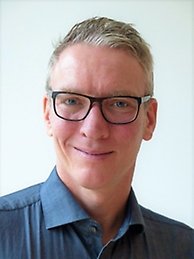
Peter Schmitt Professor
Contact
Name and title: Peter SchmittProfessor
Phone: +4686747853
ORCID0000-0003-4657-1573 Länk till annan webbplats.
Workplace: Department of Human Geography Länk till annan webbplats.
Visiting address Room X 321Svante Arrhenius väg 8
Postal address Kulturgeografiska institutionen106 91 Stockholm
About me
Professor in Human Geography with focus on Urban and Regional Planning.
Director for the Master's Programme in Urban and Regional Planning (120 ECTs).
My interest in urban and regional planning (or spatial planning) stems from my conviction that this field of research needs a solid social science foundation to complement and inform the more technical and (urban) design-based concepts. Therefore, my efforts to understand what planning is (and what it does) are rooted in urban geography and regional studies, but also in other areas of research such as governance and institutional theory, policy analysis and EU integration studies. This also means that I approach spatial planning primarily from a procedural perspective, i.e. I want to understand how planning processes work, what forms of network governance are practised and how urban and regional planners have to deal with complexity, uncertainty and different knowledge claims.
After completing my degree in human geography at the University of Münster (DE) in 1998, I worked for three years on EU-funded research projects at the ILS in Dortmund, a non-university research institute for urban and regional development. This work motivated me to do a PhD, which I completed at the Faculty of Spatial Planning at TU Dortmund University. In 2006, I moved to Sweden and became a Senior Research Fellow at Nordregio, an international research centre for regional development and planning, which is part of the Nordic Councils of Ministers and is based in Stockholm. There I continued my work with EU-funded research projects for ten years, but also worked on a number of local and regional applied research projects in the Swedish, Nordic and Baltic contexts. Since 2016 I have been working full-time at the Department of Human Geography, first as Senior Lecturer and Associate Professor (docent) and since 2023 as Full Professor of Human Geography specialising in Urban and Regional Planning.
Areas of interest:
- governance, politics and practices of regional planning
- the role and implications of EU territorial cohesion policies
- mobility of normative concepts in urban and regional planning
- trajectories and shifts of spatial planning systems in an international comparative perspective
- education of urban and regional planners
- discursive construction and institutionalization of ‘new’ regions for policy and planning
Currently I am involved in the following courses:
Theoretical Perspectives on Planning, 7.5 ECTS (Master-level, course leader)
Spatial Planning in Europe and the Nordic Countries, 7.5 ECTS (Master-level, kursansvarig)
Transformative Urban and Regional Planning, 7.5 ECTS (Master-level)
Samhällsplaneringens organisation, 7.5 ECTS (Bachelor-level, course leader)
Samhällsplaneringens processer, 7.5 ECTS (Bachelor-level)
Supervision of Master and Bachelor Thesis
Current research projects and related activities:
REPLANET: Exploring synergies between regional planning and sustainable energy transition, 2026-2030, funded by Swedish Energt Agency
Sustainable Transitions. Action Research and Training in Urban Perspective (STARTUP), 2025-2028, funded by HORIZON EUROPE
Regional planning cultures – institutional changes and place-based practices for a sustainable future (2024-2027), funding organization: FORMAS – A Swedish Research Council for Sustainable Development
Planners’ Forum for land-based spatial planning across the Baltic Sea Region (BSR), 2024-2026, funded by Swedish Institute
Planners as agents for the transition towards sustainable cities and regions – implications for future needs in expertise and education (PLANTS), 2021-2025, funding organization: FORMAS – A Swedish Research Council for Sustainable Development
ARL – Academy for Territorial Development in the Leibniz Association, Member and active in different working formats
AESOP (Association of European Schools of Planning), contact person at the Department
Editorial Board Member: European Journal of Spatial Development, Planning Practice & Research